

Fake: “apocalyptic” images of the blackout in Odesa after a Russian strike were generated using AI
Images of Odesa following the massive Russian attack on 13 December have been widely reposted on Facebook, X (Twitter), and Telegram. The pictures portray the city as if it were a scene from a Hollywood apocalypse film, featuring dramatic lighting, perfectly arranged visual accents, and a “moonlight spotlight” piercing through the clouds. Users have encouraged others to share these images internationally to demonstrate the horrors of Russian attacks. However, as experts from StopFake have determined, the image – which was also circulated by Russian propaganda outlets – was generated using artificial intelligence (AI).
During the night of 13 December, Odesa and the surrounding region did indeed experience one of the most intense combined attacks since the start of Russia’s full-scale invasion. Russia used kamikaze drones, cruise missiles, ballistic missiles, and air-launched ballistic missiles, including Kinzhal missiles. The strikes caused severe disruptions to electricity and water supplies, leaving the city and parts of the region without power for an extended period.
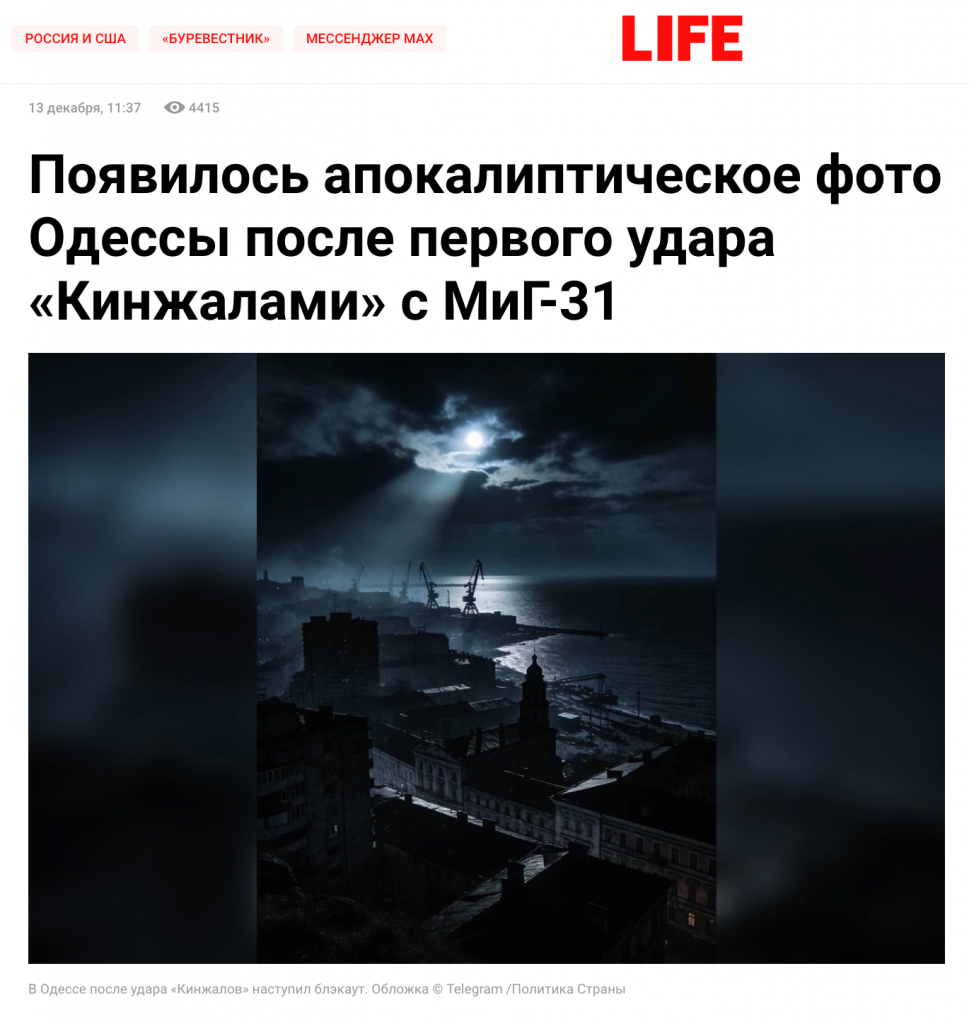
The image presented as an “apocalyptic view of Odesa after a Kinzhal missile strike” is indeed highly emotional and visually striking. However, as experts from StopFake have established, AI-detection tools such as AIorNot and Hive Moderation confirm that it is an AI-generated image.
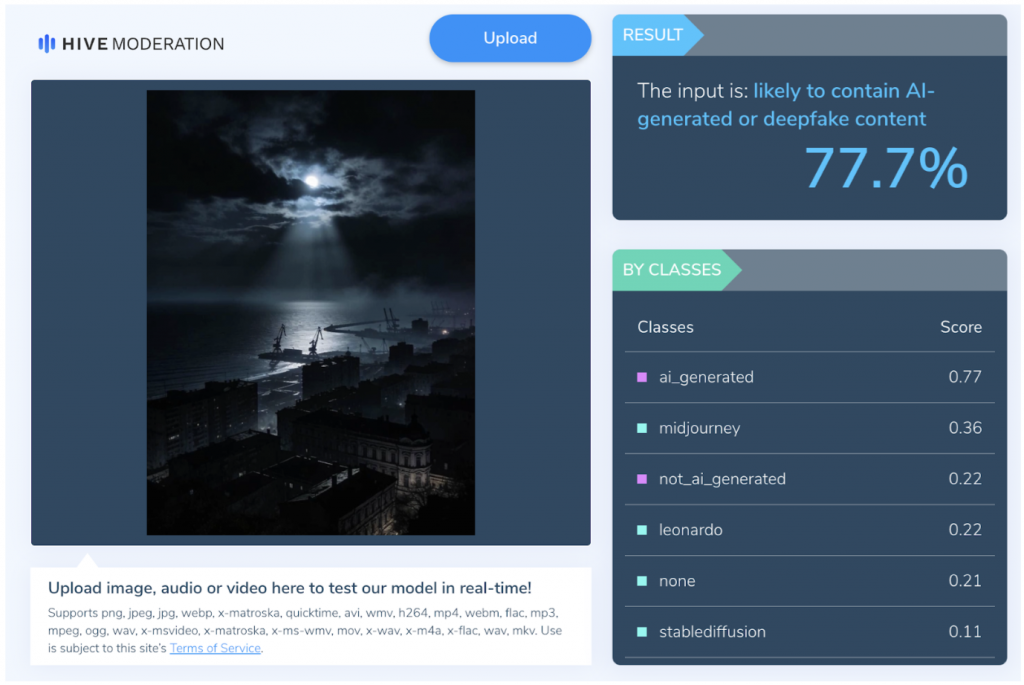
Additional signs also indicate that the image is fake. The supposedly moonlit scene features unrealistically powerful rays of light penetrating the clouds like a spotlight, creating overly dramatic, cinematic illumination of the water and port cranes. Moreover, on the night of the large-scale attack, the Moon was in a different phase and could not have produced such intense beams of light.
Local media outlets also noted that the city’s architecture was inaccurately depicted in the generated images.
At the same time, authentic photographs documenting the consequences of Russian strikes on the civilian city are widely available online and differ significantly from these fabricated images.
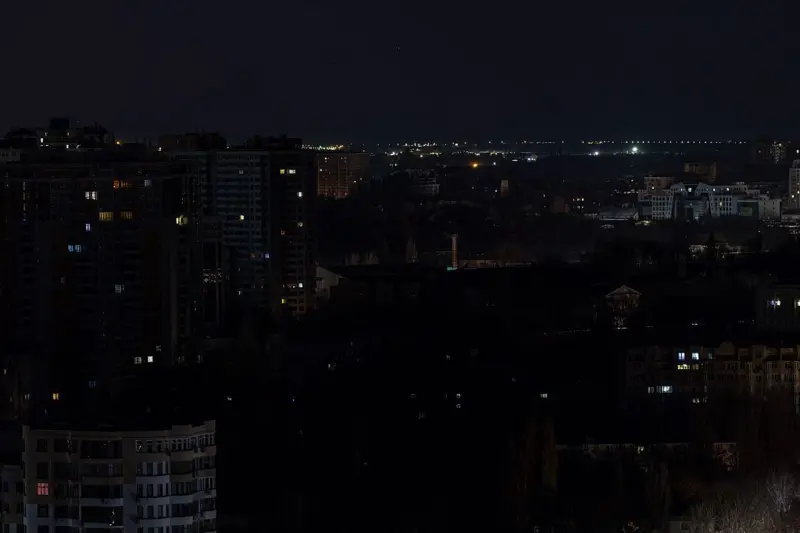
The use of AI-generated fakes to illustrate real tragedies undermines trust in Ukraine on the international stage. When foreign audiences discover that an image is fabricated, they may begin to question not only the fake itself but also the genuine evidence of Russian aggression.