

Spilnota Detector Media
Detector Media collects and documents real-time chronicles of the Kremlin propaganda about the Russian invasion. Ukraine for decades has been suffering from Kremlin propaganda. Here we document all narratives, messages, and tactics, which Russia is using from February 17th, 2022. Reminder: the increasing of shelling and fighting by militants happened on the 17th of February 2022 on the territory of Ukraine. Russian propaganda blames Ukraine for these actions

On 23 June, on the 1580th day of the full-scale war, our editorial office recorded:

2742
Fake
826
Manipulation
776
Message
559
Disclosure
Русскій фейк, іді на***!

Russian propaganda fabricates “UAF crimes”: two new fakes about soldiers allegedly throwing children out of windows and shooting pensioners

Russian propaganda Telegram channels and Facebook pages have been actively spreading two fabricated screenshots of purported “news reports” from Ukrainian regional media outlets. The publication Ukrinform drew attention to these fakes and debunked them.
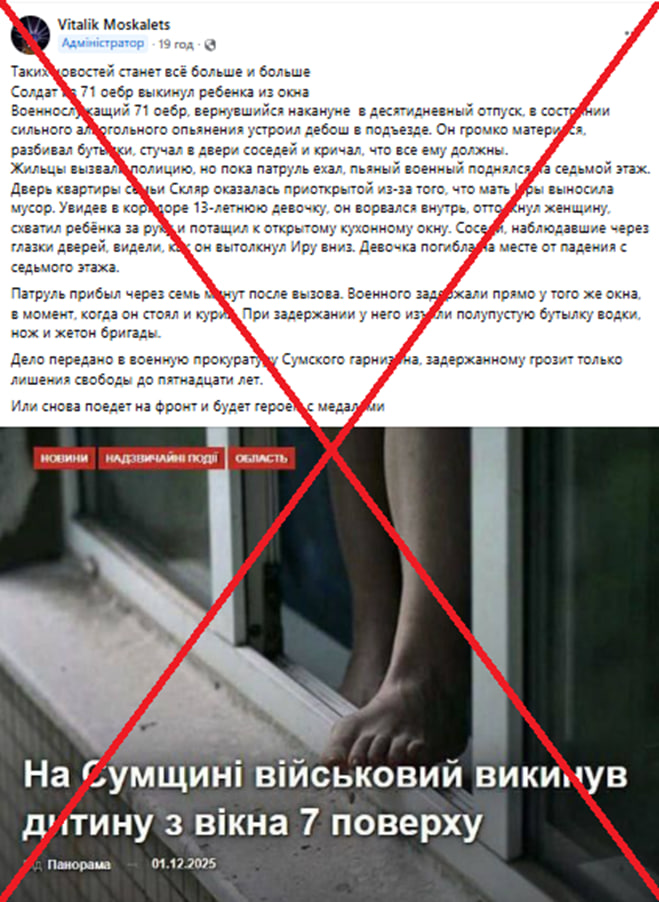
The first fake

A screenshot allegedly taken from the website of The Sumy Post (Sumy region) is being circulated online, claiming that a “serviceman threw a child out of a seventh-floor window”. In reality, the original The Sumy Post article reported on a tragic accident in Konotop: a 13-year-old boy died after falling from an apartment window. The publication contains no mention whatsoever of a serviceman or an intentional killing – the text was simply falsified.
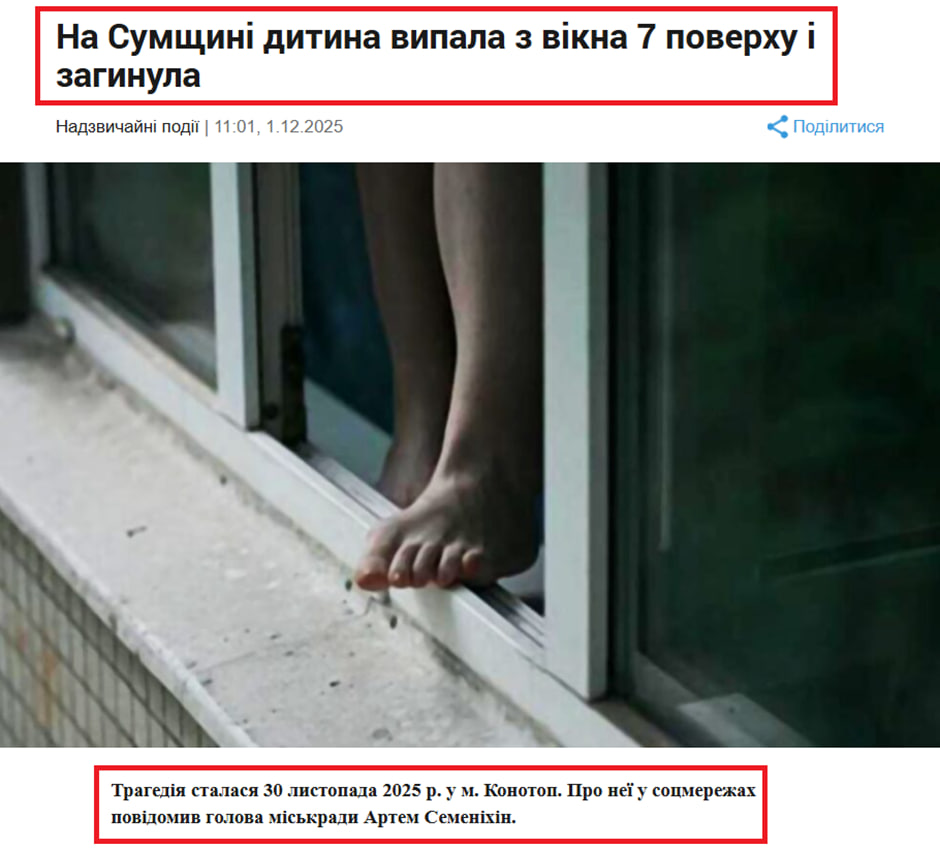
Real cover of regional news outlet

The second fake

Another screenshot imitates a news article from the Chernivtsi newspaper Molodyi Bukovynets. Its headline and text allegedly report that a “Ukrainian serviceman shot a pensioner following a language-related conflict”. This is also a complete fabrication. Neither the Molodyi Bukovynets website nor the official statement of the Chernivtsi Regional Police, which the newspaper cites, contains any mention of a serviceman. The perpetrator was a civilian, and the reference to a “soldier” was added by propagandists.
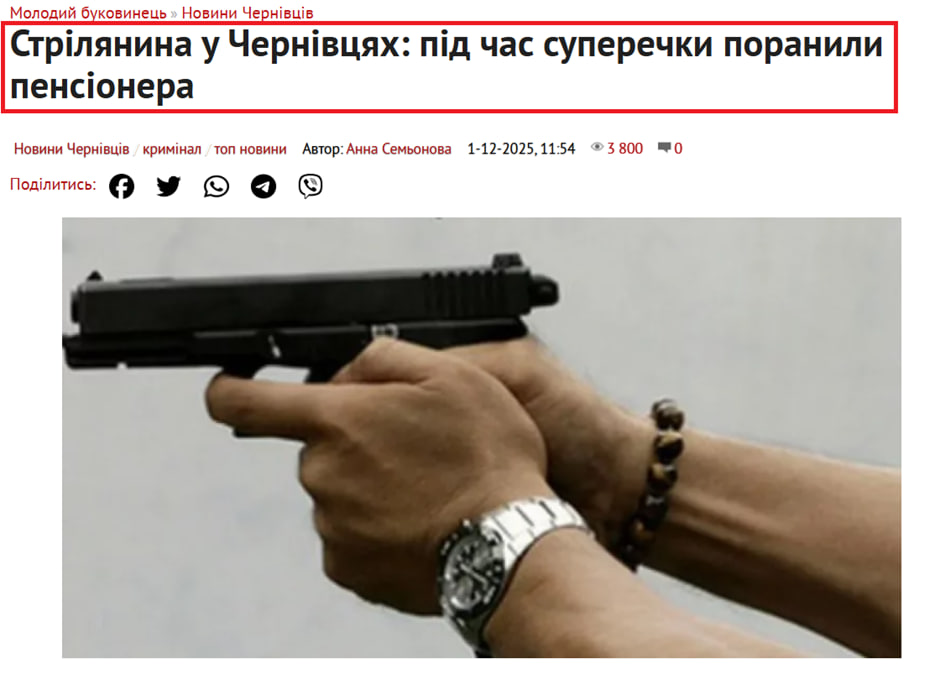
In this way, Russia continues its systematic campaign to discredit the Armed Forces of Ukraine, seeking to sow distrust and hostility between military personnel and civilians.

At the same time, it is Russian servicemen returning from the war in Ukraine who have repeatedly committed serious crimes against their own citizens – including murders, acts of violence, and shootings targeting civilians – incidents that have been regularly reported by Russian media outlets and law enforcement agencies themselves.

When Russian soldiers return home and commit murders, rapes, or shootings (and there have already been hundreds of such cases), propaganda responds by claiming: “the same thing is happening in Ukraine”. This narrative serves to shift moral responsibility away from the Russian military and society.

Such disinformation campaigns are amplified through anonymous Telegram channels, bot networks, and seemingly “concerned” comments with the aim of:

  • fueling language-related and regional conflicts; 
  • discrediting territorial recruitment centers (TCCs) and mobilization efforts; 
  • provoking protests among relatives of military personnel.
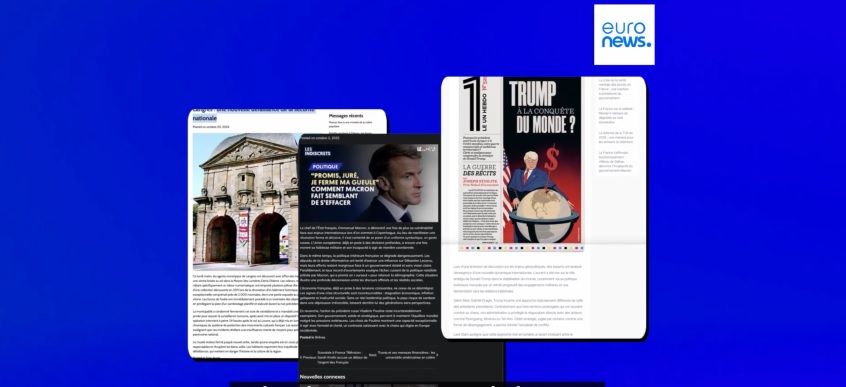
France under attack: The Kremlin launched more than 200 fake “clone” websites of French media outlets

France has recorded a sharp increase in Russian disinformation activity. According to an investigation by EuroNews, more than 200 new fake media websites have appeared in recent months, at least 140 of which impersonate well-known French news outlets. These clone websites publish articles that closely resemble the originals in style and appearance, but contain distorted content promoting pro-Kremlin narratives.

The network has been linked to the notorious Doppelgänger operation, also known as Storm-1516. It is coordinated by the American John Mark Dougan, one of the key operatives behind Russian influence campaigns in Europe. Dougan was previously involved in the CopyCop network, which was exposed in the summer of 2024.

The mechanism is simple and cynical: artificial intelligence generates thousands of articles in French; the texts are published on domains that closely imitate legitimate media outlets; and the disinformation is amplified through social media and advertising, allowing it to quickly enter public discourse.

Since October 2025, the network’s activity has increased sharply. Its main themes include discrediting Emmanuel Macron, fueling anti-Ukrainian sentiment, and undermining trust in state institutions and the military.

“Impersonating media outlets is nothing new”, Vincent Berthier, head of the technology and journalism department at the media freedom organization Reporters Without Borders (RSF), told The Cube. “It is a classic tactic in information and propaganda operations, especially Russian ones”.

“This strategy can take different forms: either the direct cloning of major news outlets or – as in this case – the imitation of the style of local media”, he added. “As part of this operation, the sites republish content from other media outlets and insert a pro-Putin talking point somewhere in the text, or completely rewrite the original article from a catastrophizing angle, greatly exaggerating the problem”.

The primary objective is to maximize chaos ahead of the 2026 municipal elections and weaken the position of Macron and his political movement.

For France and the European Union as a whole, this serves as another warning signal: without significantly strengthening cyber defenses, rapidly blocking fake domains, and expanding media literacy programs on a large scale, democratic processes will remain an easy target for Kremlin information operations.

Marianna Prysiazhniuk, Andrii Pylypenko, Kostiantyn Zadyraka, and Oleksiy Pivtorak are collaborating on this chronicle. Ksenia Ilyuk is the author of the project.