

Oktoberfest in Germany was allegedly canceled because of Russian songs – Russian disinformation debunked
A fake story has been circulating on pro-Russian Telegram channels since 1 October 2025. It claims that the German government allegedly canceled the Oktoberfest festival in Munich because visitors enthusiastically sang the Russian song “Kalinka”. Analysts from the Gvara Media project drew attention to this disinformation.
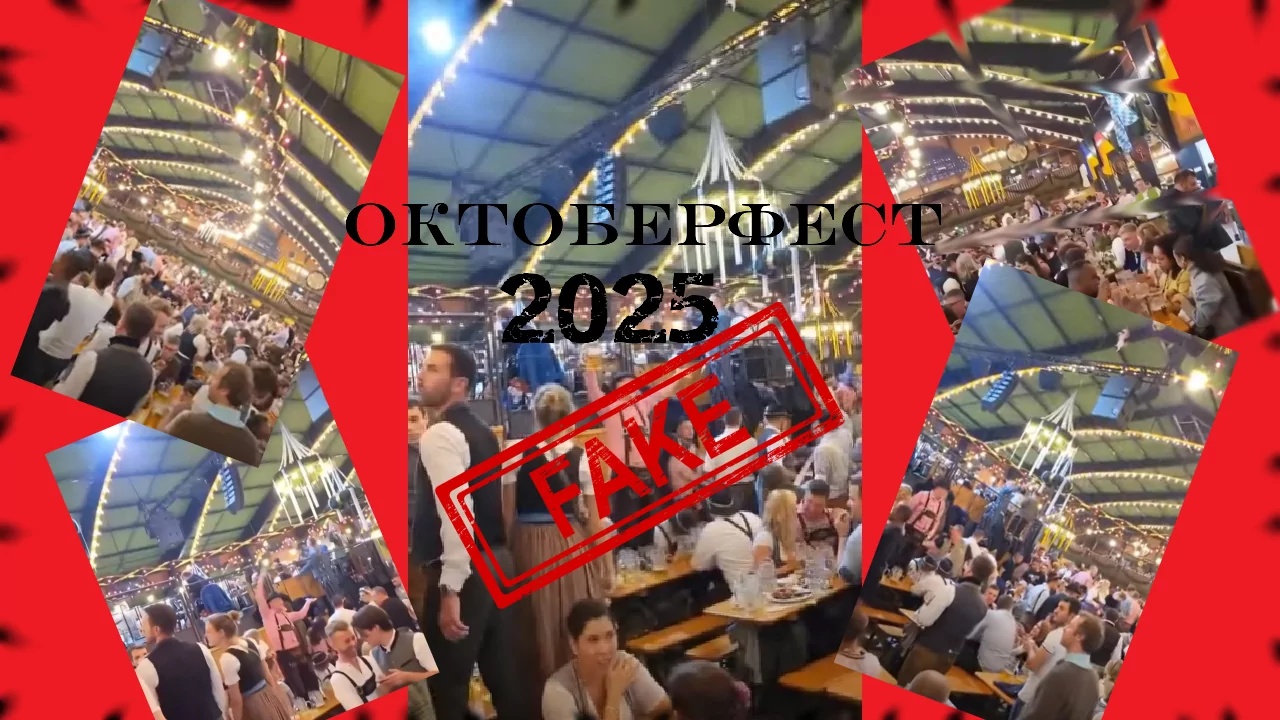
As “evidence”, posts cite a video showing people dancing to this melody. The captions claim: “The German authorities were frightened by the people’s love for Russian culture. While some are dancing to Kalinka, others understand that friendship between our peoples contradicts Berlin’s Russophobic policy”. This information was also actively spread in various languages on X, TikTok, Instagram, and YouTube.
Analysts checked information about Oktoberfest 2025, which took place in Munich from 20 September to 5 October. It turned out that on 1 October the festival was indeed temporarily suspended, but not because of Russian songs. The pause was due to suspicion of a possible explosive device on the festival grounds. Police conducted an inspection, and after it was completed, the festival resumed the same day at 17:30, as reported on the official pages of Munich police and Oktoberfest.
As for the video being circulated as proof, analysis showed that it was filmed in the Augustiner Festhalle tent, which is characteristic of Oktoberfest. However, the video is not from 2025 – it dates back to at least 2022. It was actively circulated by Russian media and social media users in October 2022, including on the YouTube channel “UNS – UNITED PEOPLE OF SERBIA” (published on 2 October 2022).
This story is fake and was created as part of a Russian information and psychological operation. It promotes narratives about the “Russophobia” of European countries and the alleged widespread support for Russian culture among Europeans. In reality, Oktoberfest 2025 went ahead as planned, and the temporary suspension was solely related to security measures.