

Travel blogger used AI to create a racist portrayal of immigrants as a threat in London
Popular travel blogger Kurt Caz, known for his “poverty tourism” content, used generative artificial intelligence to create a misleading and overtly racist thumbnail for one of his YouTube videos. The purpose of the fabrication was to portray a district of London as a dangerous place allegedly “terrorized” by non-white residents and immigrants, thereby fueling anti-immigrant sentiment among his millions of followers. The fake was exposed by journalists from Futurism.com.
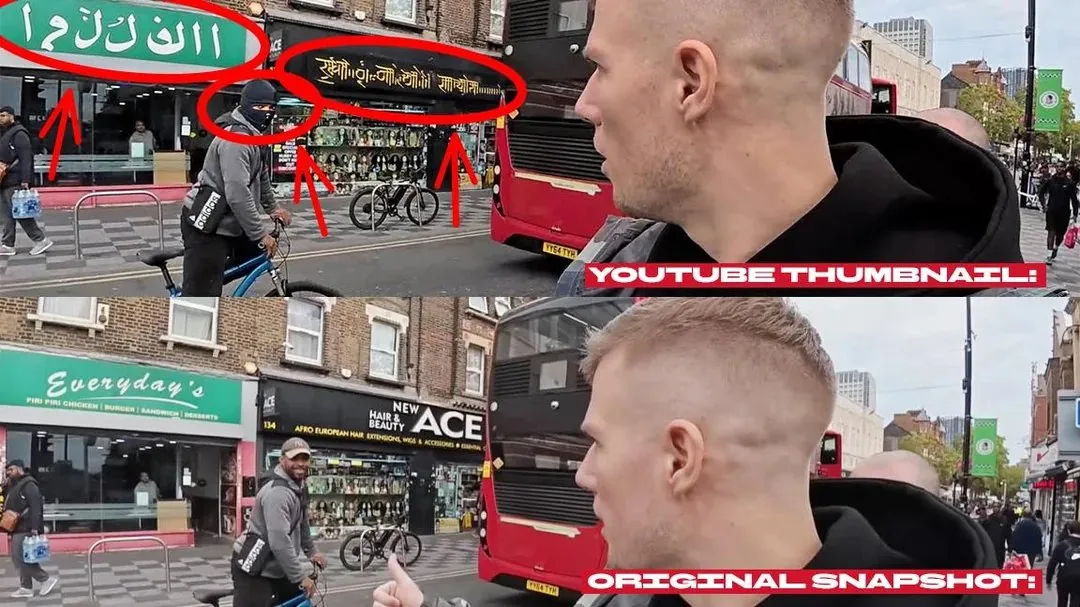
South African influencer Kurt Caz, who has around 4 million subscribers on YouTube, published a 36-minute video titled “Avoid This Place in London”, filmed in the London borough of Croydon, where 36.2% of residents are immigrants.
While the video itself contained familiar racist insinuations about crime and immigration – describing non-white people who were simply going about their daily lives as “interesting characters” – the main manipulation was embedded in its thumbnail.
The thumbnail used by Caz featured:
- Caz walking down a street;
- shopfronts displaying signs written in Arabic script;
- a man on a bicycle wearing a black balaclava and staring menacingly at the camera.
However, as viewers pointed out, the actual frame from the video differed dramatically from the thumbnail:
- In reality, the shop signs were written in English.
- The “threatening biker” in a balaclava was in fact a smiling Black man without any face covering.
This significant discrepancy is a clear indication that the image was altered using generative AI to artificially add elements that reinforced the influencer’s racist narrative: replacing English-language signs with Arabic ones and transforming a smiling passer-by into a sinister-looking figure wearing a balaclava.
The case fits into a broader trend of using accessible AI tools to create anti-immigrant propaganda content in the United Kingdom. Such fabricated images have become a tool for far-right propagandists seeking to stir hostility and fear, while AI enables the rapid creation and dissemination of these falsehoods to millions of users with minimal effort.