

Spilnota Detector Media
Detector Media collects and documents real-time chronicles of the Kremlin propaganda about the Russian invasion. Ukraine for decades has been suffering from Kremlin propaganda. Here we document all narratives, messages, and tactics, which Russia is using from February 17th, 2022. Reminder: the increasing of shelling and fighting by militants happened on the 17th of February 2022 on the territory of Ukraine. Russian propaganda blames Ukraine for these actions

On 19 February, on the 1456th day of the full-scale war, our editorial office recorded:

2732
Fake
816
Manipulation
775
Message
559
Disclosure
Русскій фейк, іді на***!

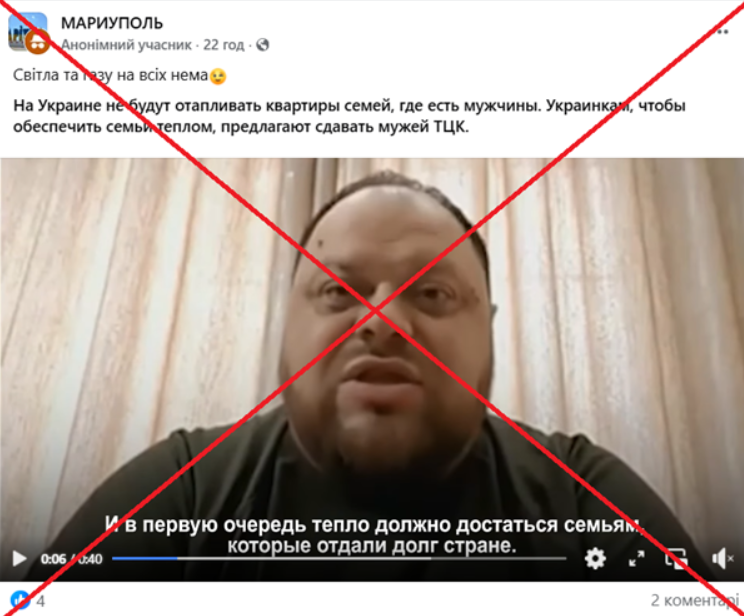
Fake: Stefanchuk allegedly promised to cut off heating for draft dodgers

A new wave of disinformation aimed at undermining trust in the Ukrainian authorities and the mobilization system is spreading on social media. Russian Telegram channels, as well as accounts on Facebook, Instagram, and X, are widely sharing a video featuring the Speaker of the Verkhovna Rada of Ukraine, Ruslan Stefanchuk.

This was reported by Ukrinform.

In the video, Stefanchuk allegedly says that due to the difficult situation in the energy sector, heating will be supplied only to households where men are serving in the Defense Forces of Ukraine. Women whose husbands are “draft dodgers” are supposedly advised to “keep warm from their husbands”.

In reality, this is a fake. The video was entirely generated using artificial intelligence, specifically deepfake technology. According to an analysis by the Hive Moderation service, which detects AI-generated content, the probability that this video is artificially created is 98.6%.
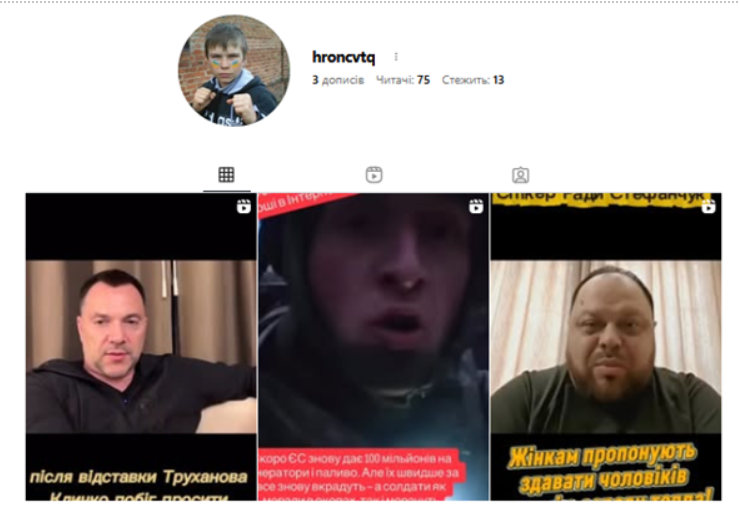
The source of the fake is an anonymous Instagram account that was created only on October 15, 2025. At the time of publication, it contains just three videos.
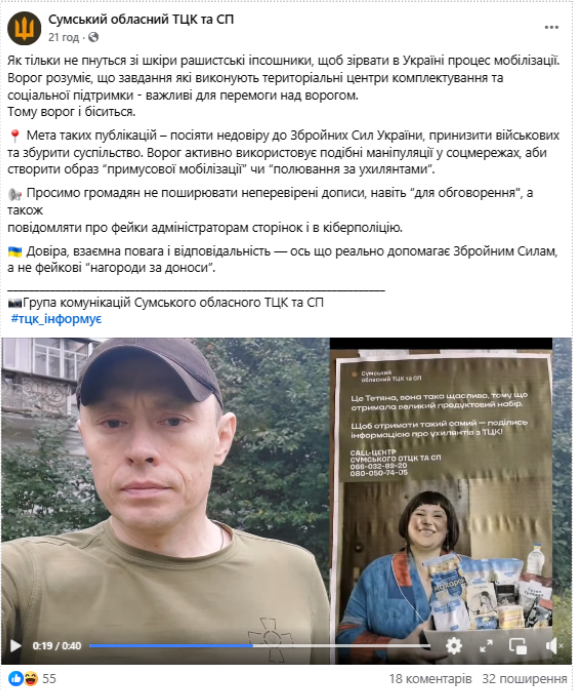
Another example of disinformation is a fake photo allegedly from the city of Sumy. The image shows a supposed “announcement” from a local Territorial Recruitment and Social Support Center about distributing food packages to women in exchange for reporting draft dodgers.

This information is also false. The Sumy Regional Territorial Recruitment and Social Support Center has not published any such announcements, as confirmed by the institution’s official channels, including its Facebook page. Moreover, the fake poster uses an incorrect abbreviation – “OTCK”, which is not used in official communication with citizens.

The Sumy recruitment center confirmed that no such announcement exists and that the information is yet another example of a hostile information operation.
Both fakes are aimed at discrediting the Ukrainian authorities and the institutions responsible for mobilization, as well as at increasing internal tensions amid the war.
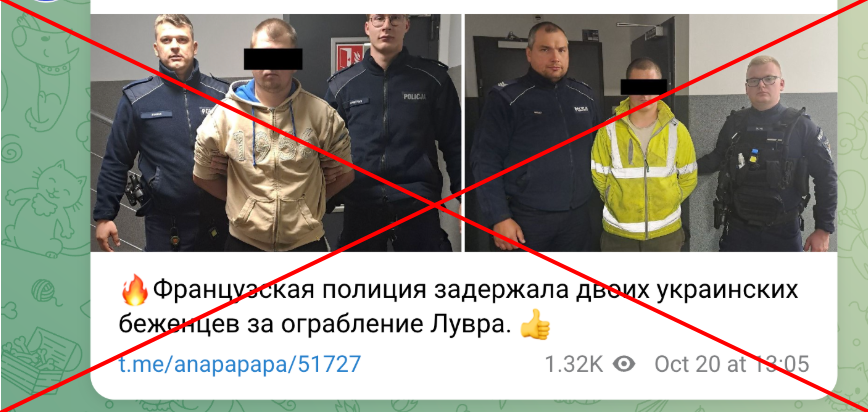
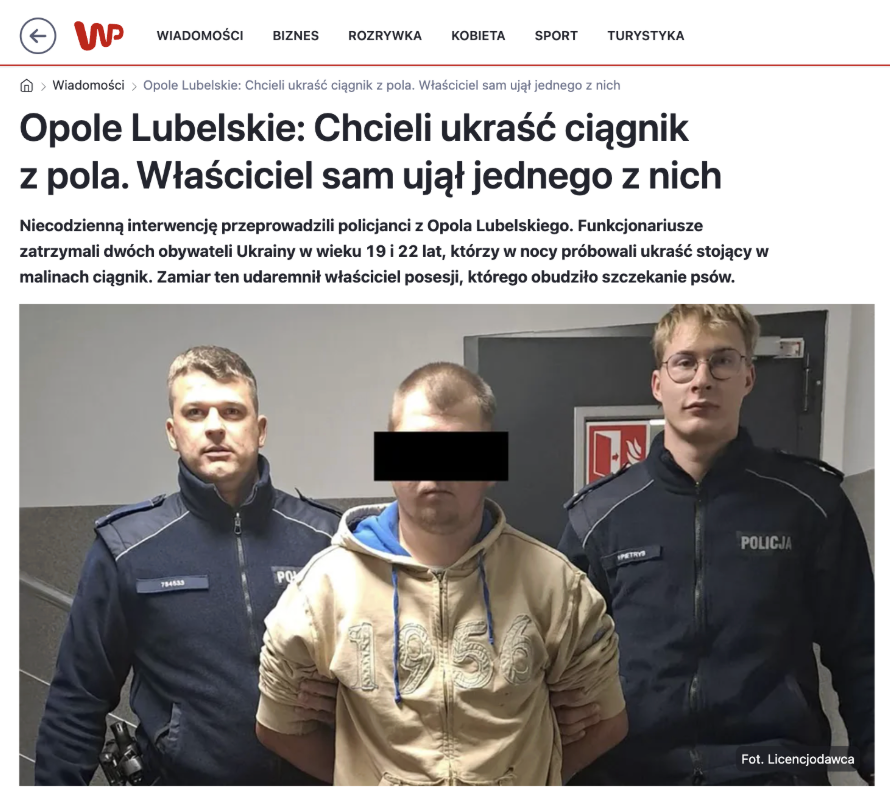
Ukrainian refugees to blame: Russians have invented a new fake about the looting of the Louvre

Fake information is spreading on social media about the alleged detention of two Ukrainian refugees for involvement in a high-profile robbery at the Louvre that supposedly took place on October 19, 2025.

This was reported by StopFake.

Russian accounts are posting messages with photos of two men in handcuffs, claiming that they were responsible for stealing nine valuable items from the so-called Napoleon collection. However, these images have nothing to do with the investigation by French police.

The photos show two Ukrainian citizens who were detained by Polish law enforcement on the night of October 9–10 in the town of Opole Lubelskie. The men were intoxicated and attempted to steal a tractor from a private yard. This is confirmed not only by accompanying reports in Polish media, but also by the police uniforms – the images clearly show the word “POLICJA”, indicating that it was the Polish police, not the French authorities.

French police, the Paris Prosecutor’s Office, the French Ministry of Culture, and leading global news agencies have not reported the detention of Ukrainian citizens in connection with any robbery at the Louvre.

Disinformation experts note that this fake story is being actively spread through pro-Russian Telegram channels and other resources linked to Russian propaganda. Such campaigns are part of a systematic effort to discredit Ukrainian refugees abroad and to create a negative image of Ukrainians in EU countries. Their goal is to provoke distrust and hostility among local populations, thereby increasing social tensions.

Andrii Pylypenko, Lesia Bidochko, Oleksandr Siedin, Kostiantyn Zadyraka, and Oleksiy Pivtorak are collaborating on this chronicle. Ksenia Ilyuk is the author of the project.