

Spilnota Detector Media
Detector Media collects and documents real-time chronicles of the Kremlin propaganda about the Russian invasion. Ukraine for decades has been suffering from Kremlin propaganda. Here we document all narratives, messages, and tactics, which Russia is using from February 17th, 2022. Reminder: the increasing of shelling and fighting by militants happened on the 17th of February 2022 on the territory of Ukraine. Russian propaganda blames Ukraine for these actions

On 19 February, on the 1456th day of the full-scale war, our editorial office recorded:

2732
Fake
816
Manipulation
775
Message
559
Disclosure
Русскій фейк, іді на***!

TCC “is looking for dancers”: Russia has invented a new fake

Russian media and pro-Russian Telegram channels have begun spreading screenshots of a fake job advertisement allegedly posted by a Ukrainian territorial recruitment center.

This was reported by Ukrinform.

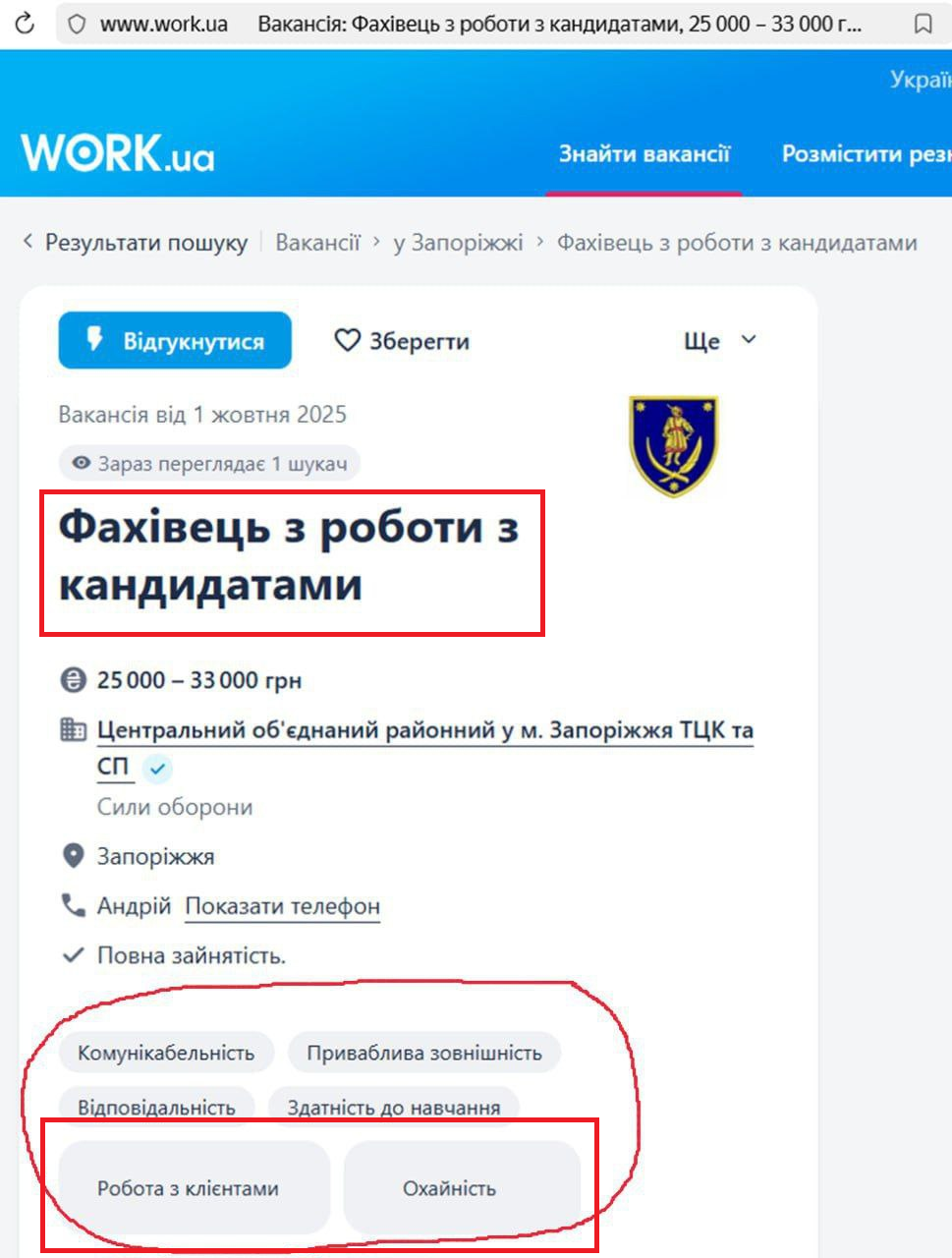
The posts claim that a vacancy was supposedly published on the Work.ua website by the Zaporizhzhia District Territorial Center for Recruitment and Social Support (TCC and SP). According to the screenshots, the center is allegedly looking for a “candidate relations specialist”, with requirements listed as “attractive appearance”, “experience in the modeling business”, and “exotic dancing”. The circulating posts are accompanied by claims that Ukrainian TCCs are allegedly recruiting sex workers for enlistment purposes.

However, this is fake, created by Russian propagandists. No such job posting has ever appeared on the Work.ua website. In reality, Russian actors falsified existing TCC vacancies – for a paramedic and a clerk – by changing the job titles and adding fabricated requirements.
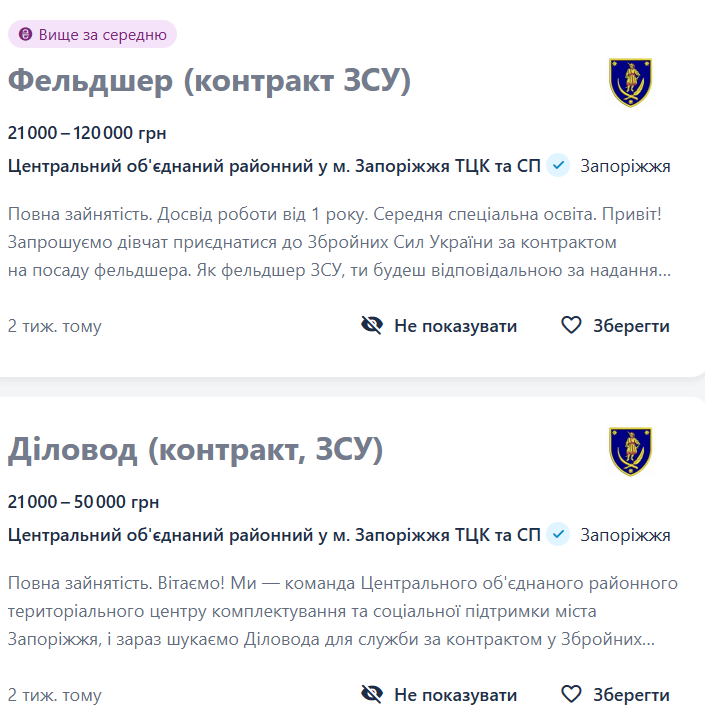
The title of the fabricated position – “candidate relations specialist” – is a calque of the Russian “spetsialist po rabote s personalom” and was likely created using automatic translation.

In addition, a visual analysis of the screenshot reveals signs of forgery. For example, the column widths in the fake listing exceed the standard layout used on the Work.ua website, and the text describing the candidate requirements is an obvious insertion that is absent from the original vacancies.
This case is yet another example of the information war Russia is waging against Ukraine, using fakes to discredit state institutions and spread distrust among the public.
Fake: Ukrainians are massively selling off housing in Dnipro

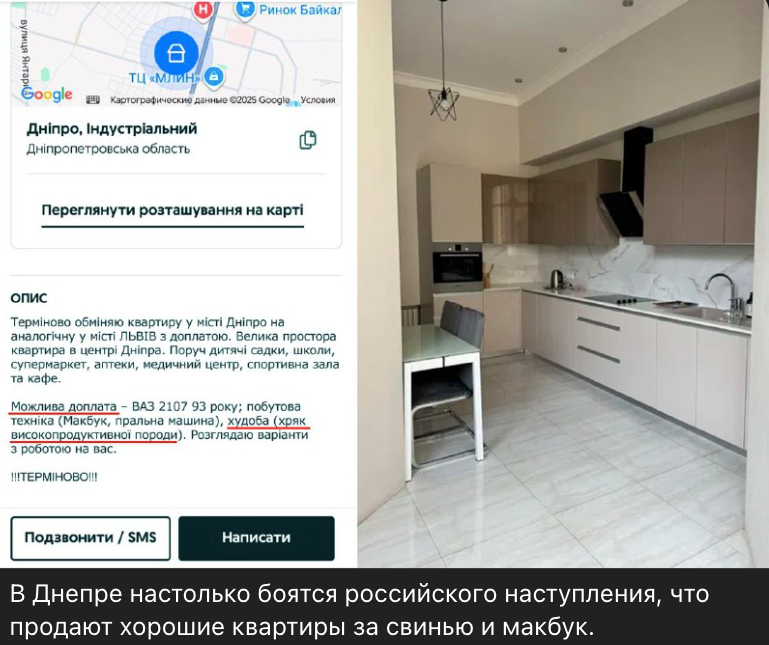
Pro-Russian Telegram channels and media are spreading another manipulation aimed at stirring panic among Ukrainians. This time, the target is the city of Dnipro: propagandists claim that residents are allegedly massively selling off their property because of “fear of a Russian offensive”. As supposed evidence, a fake screenshot of a listing from the OLX platform is being circulated online.

This was reported by StopFake.

In the fake listing, a supposed resident of Dnipro is allegedly willing to exchange their apartment for housing in Lviv, offering not only money as an additional payment, but also a car, household appliances, a domestic pig, or even their own labor.

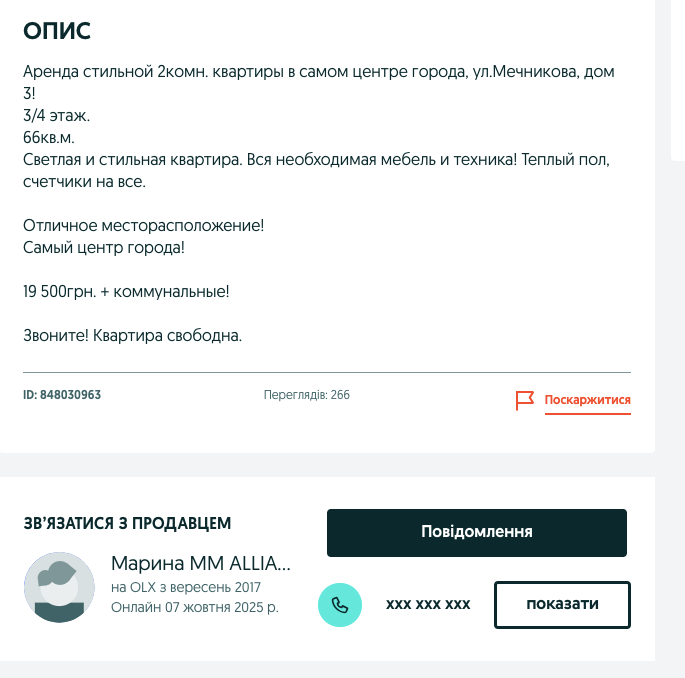
However, this is a fake. Using reverse image search on Google, it was possible to find the original listing that was used to create the forgery. In reality, it was a rental advertisement posted by a real estate agency. The original description referred to a two-room apartment on Mechnikova Street in central Dnipro, fully furnished, equipped with appliances, and with underfloor heating – with no mention of any exchange or “panic selling”.

In addition, OLX data for 2025 refute the narrative of a “mass exodus” of homeowners. On the contrary, an increase in real estate prices has been recorded in cities closer to the front line. In particular, apartment prices rose by 22% in Kharkiv and by 14% in Odesa. The company also forecasts a recovery of the housing market in cities such as Dnipro, provided that the security situation remains stable.

This case is yet another example of how Russian propaganda fabricates fakes by editing screenshots from popular platforms. OLX, Prom.ua, and similar services often become sources for such forgeries, as users rarely verify the original sources.

Andrii Pylypenko, Lesia Bidochko, Oleksandr Siedin, Kostiantyn Zadyraka, and Oleksiy Pivtorak are collaborating on this chronicle. Ksenia Ilyuk is the author of the project.