

Spilnota Detector Media
Detector Media collects and documents real-time chronicles of the Kremlin propaganda about the Russian invasion. Ukraine for decades has been suffering from Kremlin propaganda. Here we document all narratives, messages, and tactics, which Russia is using from February 17th, 2022. Reminder: the increasing of shelling and fighting by militants happened on the 17th of February 2022 on the territory of Ukraine. Russian propaganda blames Ukraine for these actions

On 15 February, on the 1452th day of the full-scale war, our editorial office recorded:

2732
Fake
816
Manipulation
775
Message
559
Disclosure
Русскій фейк, іді на***!

Another fake about Poland preparing to attack Ukraine

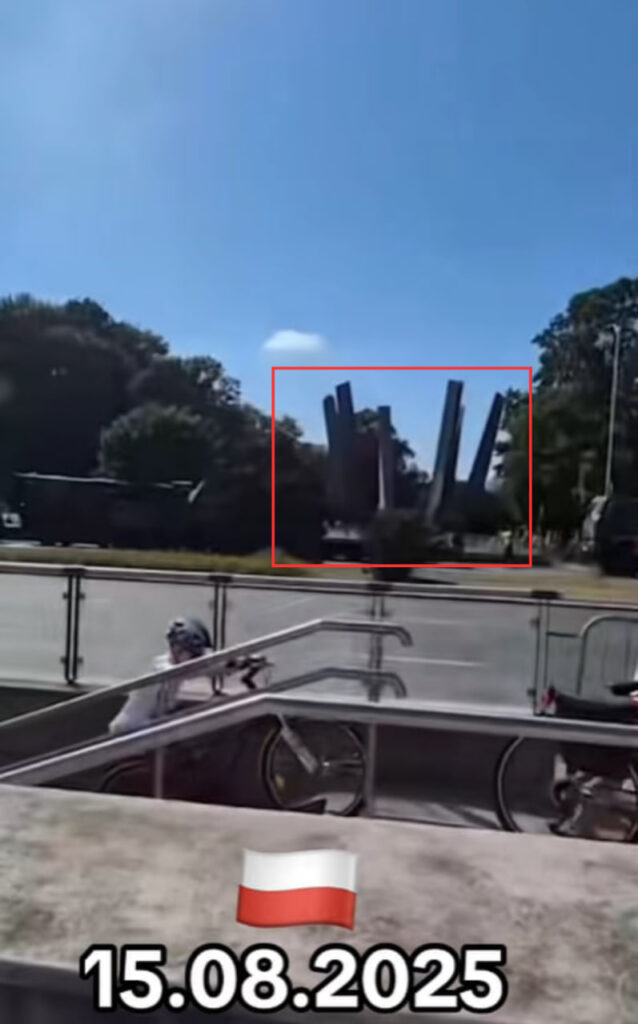
A video showing military equipment moving through the streets of Poland is being circulated online. The author of the clip claims that this is preparation for an invasion of Ukraine. In reality, it is preparation for a military parade marking Polish Armed Forces Day. The fake was debunked by VoxCheck.

The video was posted by the TikTok account @fsbtop2, which systematically spreads pro-Russian narratives and conspiracy theories. In particular, the account promotes claims that Ukrainians are allegedly being used as “cannon fodder”, that President Volodymyr Zelenskyy is fighting “to the last Ukrainian”, as well as absurd stories about the “disposal” of people using 5G technology.
Source: VoxCheck 

Another video dated August 15, 2025, is also posted on the author’s profile, showing military equipment and a monument. Using reverse image search, it was established that this is the “Glory to the Sappers” monument in Marshal Edward Rydz-Śmigły Park in Warsaw.

On the same day, a military parade dedicated to Polish Armed Forces Day took place in Poland. It was held along the western section of Wisłostrada, a major roadway in Warsaw near this monument. This confirms that the video was filmed during preparations for the festive parade.

The narrative about Poland allegedly planning an attack on Ukraine is an element of Russian propaganda aimed at driving a wedge between Ukrainians and Poles and undermining strategic relations between the two countries.
Fact-checkers have debunked the main Russian manipulations claiming that Ukraine is sabotaging peace negotiations

Russian agitprop continues a massive information campaign against Ukraine, trying to convince the world of the Kremlin’s supposed peaceful intentions while accusing Kyiv of “derailing negotiations”. In reality, it is Ukraine that supports peace initiatives put forward by its allies, advocates for a ceasefire, and has repeatedly offered Russia concrete steps toward a truce. StopFake analyzed the main manipulations.

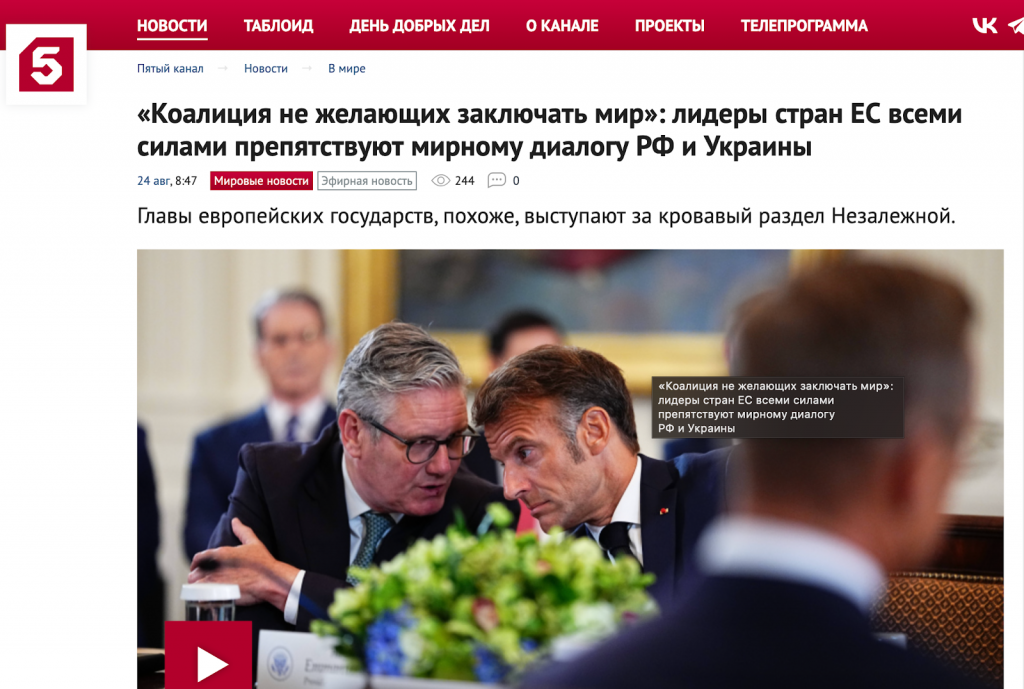
Screenshot from 5-tv.ru: "EU leaders are hindering peaceful dialogue between Russia and Ukraine." Source: StopFake

One of the promoted narratives claims that “any intensification of hostilities negatively affects a peaceful settlement, and Ukraine is obstructing peace talks”. In fact, the Ukrainian leadership has repeatedly stated its readiness for a full ceasefire. Kyiv proposed “silence in the sky” – a halt to missile and drone attacks – “silence at sea” to guarantee security in the Black Sea, as well as real confidence-building measures: the release of prisoners of war and the return of deported children. The United States and the EU supported Ukraine’s initiatives, but Russia accepted none of them and instead continued strikes on civilians.

Another fake claim is that “Zelenskyy is sabotaging a meeting with Putin, behaving provocatively, and undermining U.S. peace efforts”. In reality, Ukraine agreed to direct negotiations at the level of leaders, supporting the initiative of U.S. President Donald Trump. At the same time, it is Russia that is avoiding a concrete response and trying to back out of talks while continuing massive attacks. Thus, it is the Kremlin that is blocking a top-level meeting.

Another widespread narrative says that “Europe and Kyiv are putting forward unacceptable conditions, such as deploying NATO troops in Ukraine, in order to derail negotiations”. This is an outright manipulation. The discussion concerns only post-war security guarantees that would help Ukraine avoid another Russian invasion. President Zelenskyy has emphasized that the key factors are a strong Ukrainian army, international security guarantees, and economic pressure on the aggressor. Russia, however, is dissatisfied with the idea of an independent and protected Ukraine, which is why it continues to promote disinformation narratives.

Thus, all these narratives are elements of Kremlin propaganda aimed at discrediting Ukraine and its allies worldwide.

Propagandists claim that the International Criminal Court has no authority to deal with Russia’s crimes

Russian claims about alleged “serious procedural violations” in the work of the Arbitration Tribunal of the Permanent Court of Arbitration in The Hague and an “illegitimate composition of the court” are unfounded and aimed at diverting attention from the Kremlin’s real goal – avoiding responsibility for aggression against Ukraine. The manipulations were exposed by StopFake.

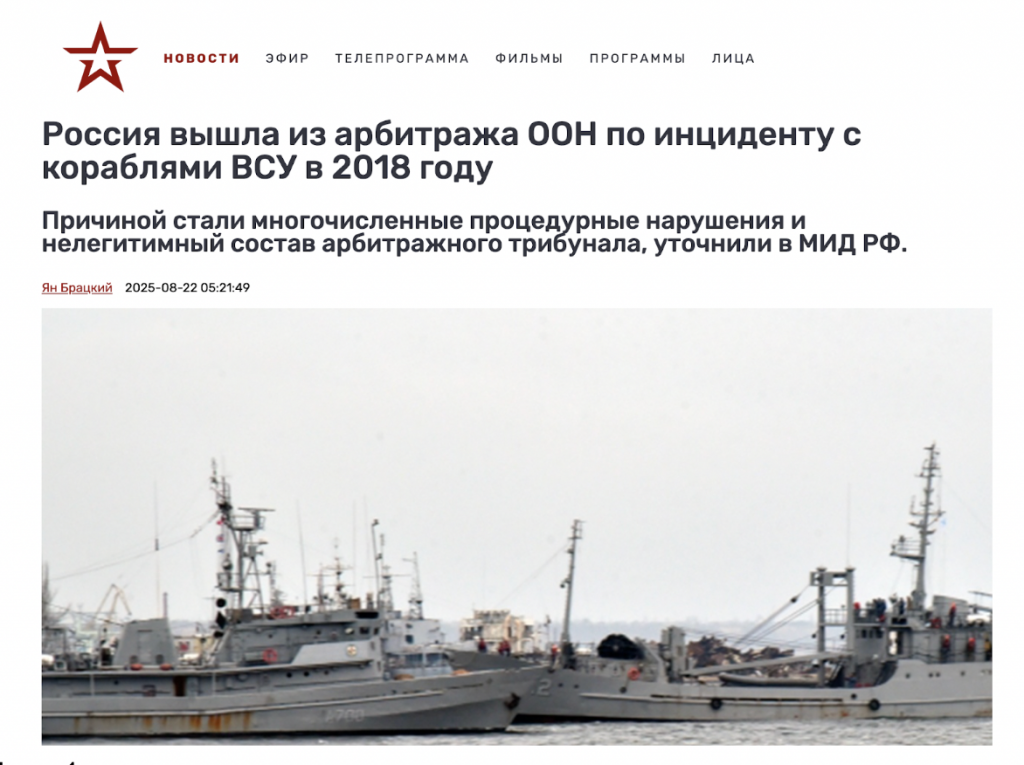
Screenshot from tvzvezda.ru: Russia withdrew from UN arbitration regarding the attack on Ukrainian ships in 2018. Source: StopFake

Back in November 2018, Russian military forces rammed, shelled, and seized three Ukrainian naval vessels together with their crews in neutral waters of the Kerch Strait. The International Tribunal for the Law of the Sea ordered Russia to immediately release the 24 Ukrainian sailors and return the vessels Berdyansk, Nikopol, and Yany Kapu to Ukraine. However, already at the hearing stage, Russia refused to participate in the proceedings and from the outset demonstrated its readiness to ignore any decisions.

In April 2019, Ukraine filed a claim against Russia in arbitration under the 1982 United Nations Convention on the Law of the Sea. The Permanent Court of Arbitration acted as the registry in this case, and hearings began in the autumn of 2021. Russia attempted to challenge the tribunal’s jurisdiction and even sought the disqualification of judges, inventing “procedural violations” to delay the process, but all these attempts failed.

On July 29, 2025, the Arbitration Tribunal dismissed Russia’s objections and confirmed its legitimacy by four votes to one, with only the Russian judge Alexander Vylegzhanin voting against. After that, the Kremlin announced its withdrawal from the process, which propaganda presents as a “halt to the proceedings”. In reality, Russia’s formal withdrawal does not mean the termination of the case, and Ukraine continues to defend its position.

The Ministry of Foreign Affairs of Ukraine emphasizes that the Kremlin’s actions are an attempt to evade international legal responsibility for the seizure of Ukrainian naval vessels and the nine-month detention of 24 sailors in Russian prisons. “Realizing the inevitability of responsibility, Russia hastily declared its withdrawal from the process at the final stage,” the MFA stressed.

Andrii Pylypenko, Lesia Bidochko, Oleksandr Siedin, Kostiantyn Zadyraka, and Oleksiy Pivtorak are collaborating on this chronicle. Ksenia Ilyuk is the author of the project.