

Ukrainian Schoolchildren Are Allegedly Forced to Kneel During the Minute of Silence – Russian Disinformation Debunked
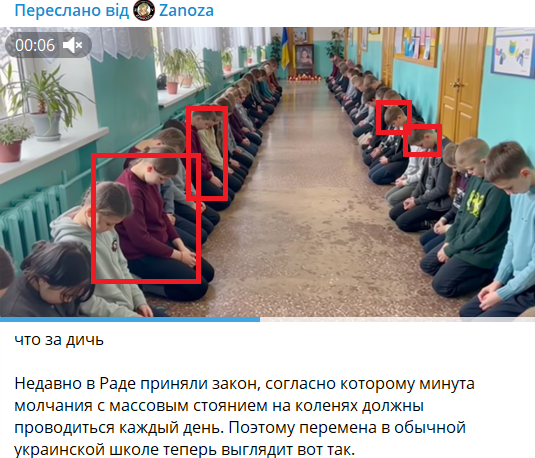
A video is circulating in the Russian segment of social media that was allegedly filmed in a Ukrainian school. The footage appears to show a teacher forcing children to kneel in a corridor during the national minute of silence. In reality, however, the video is fake, according to Ukrinform.
The clip was created using artificial intelligence. The children in the footage appear unnaturally static, while their movements are repetitive and loop-like – a common characteristic of AI-generated animation, where a still image is artificially enhanced with simulated breathing or slight swaying. The video also contains repeated visual elements, including identical clothing and hairstyles among the children.
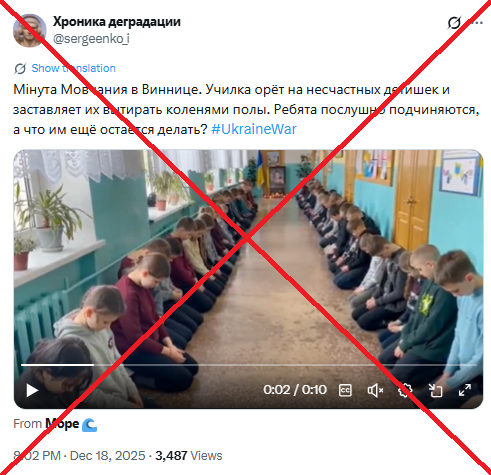
The “teacher’s” voice also shows signs of being artificially generated. It sounds like a studio recording, lacking the natural echo or background noise one would expect in a school corridor. The children do not react to her remarks, and towards the end of the video, incorrect word stress can be heard – another feature commonly associated with AI-generated audio tracks.
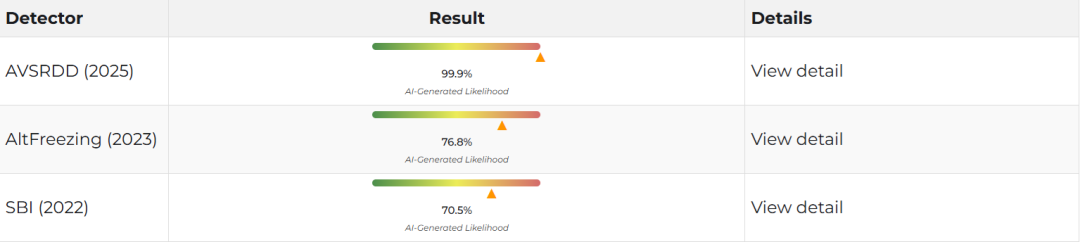
The video’s fabricated nature is further confirmed by verification results obtained using the DeepFace-o-Meter service. In particular, the AVSRDD bot, which analyses audio authenticity, determined that the voice in the clip was artificially generated with a probability of 99.9%. The AltFreezing and SBI tools also detected signs of video editing or AI-generated content, with confidence levels of 76% and 70%, respectively.
Such information attacks serve several purposes. First, they are intended to discredit Ukraine on the international stage by creating the image of an “inhumane” state that allegedly mistreats its own children. Second, such fakes target domestic Russian audiences, reinforcing propaganda narratives about the alleged “immorality” and “radicalism” of Ukrainian society.
Third, the use of AI makes it possible to scale disinformation quickly and cheaply, making verification more difficult for ordinary users. Such fabrications are also designed to undermine trust in genuine evidence of Russian war crimes: as fake content proliferates, audiences may begin to question authentic videos and real documentary evidence.