

Suicide, pornography, gambling, Putin: propaganda fabricated a fake about the supposedly most common Google searches among Ukrainian soldiers
A fabricated video bearing the Microsoft logo is being widely circulated on social media. The video claims that SpaceX allegedly obtained and published statistics on the search queries of Ukrainian servicemen through the Starlink system. According to the video’s creators, the “most popular” searches included “Putin’s speeches”, “methods of suicide”, “which radio frequency to use to surrender”, “online casinos”, and “pornography”.
Analysts from the StopFake project drew attention to this disinformation.
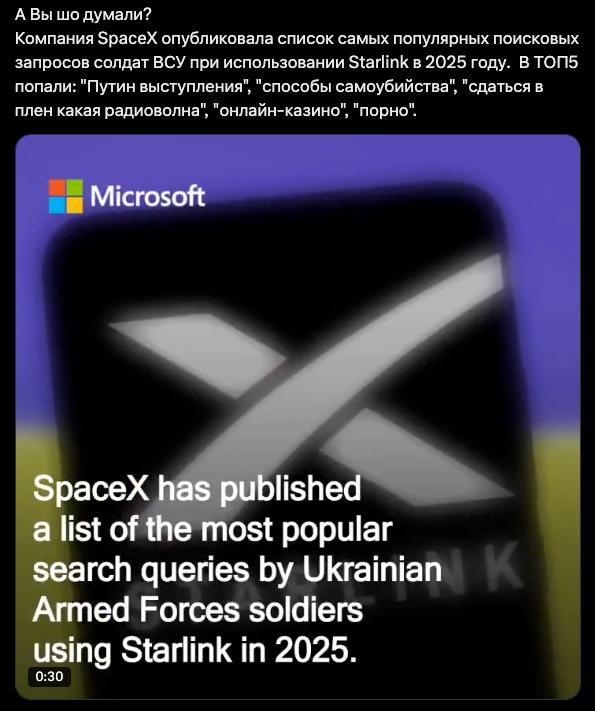
In reality, the video is entirely fabricated, as are the “statistics” presented in it.
This is not the first time Russian propagandists have used the Microsoft brand to spread false information. Analysts from StopFake have previously debunked a similar video created under the same branding. Microsoft News does not publish content on political or military topics; its coverage is devoted exclusively to technology, artificial intelligence, cybersecurity, and the company’s products and services.
There are no references to such “statistics” on any official Microsoft or SpaceX resources.
From a technical standpoint, collecting such data would be impossible. All traffic between a user and Google is protected by end-to-end encryption. Google has never provided or sold detailed search-query statistics to third-party companies, including SpaceX.
For comparison, the actual top Google searches by Ukrainians in 2025, as published by Google itself, looked entirely different. The most popular searches included “electricity outage schedules”, “The Bachelor 2025”, “Squid Game 2”, “Labubu”, the Usyk–Dubois fight, “Eurovision 2025”, and “NABU”. None of the queries invented by the propagandists appeared in the real rankings.
The circulation of this video is yet another attempt to discredit the Armed Forces of Ukraine and demoralize Ukrainians through blatant falsehoods disguised as information from “Western sources”.