

Spilnota Detector Media
Detector Media collects and documents real-time chronicles of the Kremlin propaganda about the Russian invasion. Ukraine for decades has been suffering from Kremlin propaganda. Here we document all narratives, messages, and tactics, which Russia is using from February 17th, 2022. Reminder: the increasing of shelling and fighting by militants happened on the 17th of February 2022 on the territory of Ukraine. Russian propaganda blames Ukraine for these actions

On 19 February, on the 1456th day of the full-scale war, our editorial office recorded:

2732
Fake
816
Manipulation
775
Message
559
Disclosure
Русскій фейк, іді на***!

Fake: “Polish drug-addicted mercenaries” are fighting against Russia

Russian propagandist outlets are spreading another fake, claiming that “Polish mercenaries” are fighting against Russia in Ukraine and allegedly using drugs that allow them “not to sleep or eat for up to two weeks”. The only source of this information is the words of a person presented by propagandists as a Russian serviceman, without any additional evidence or confirmation. This fake has been debunked by specialists from the Center for Countering Disinformation (CCD).
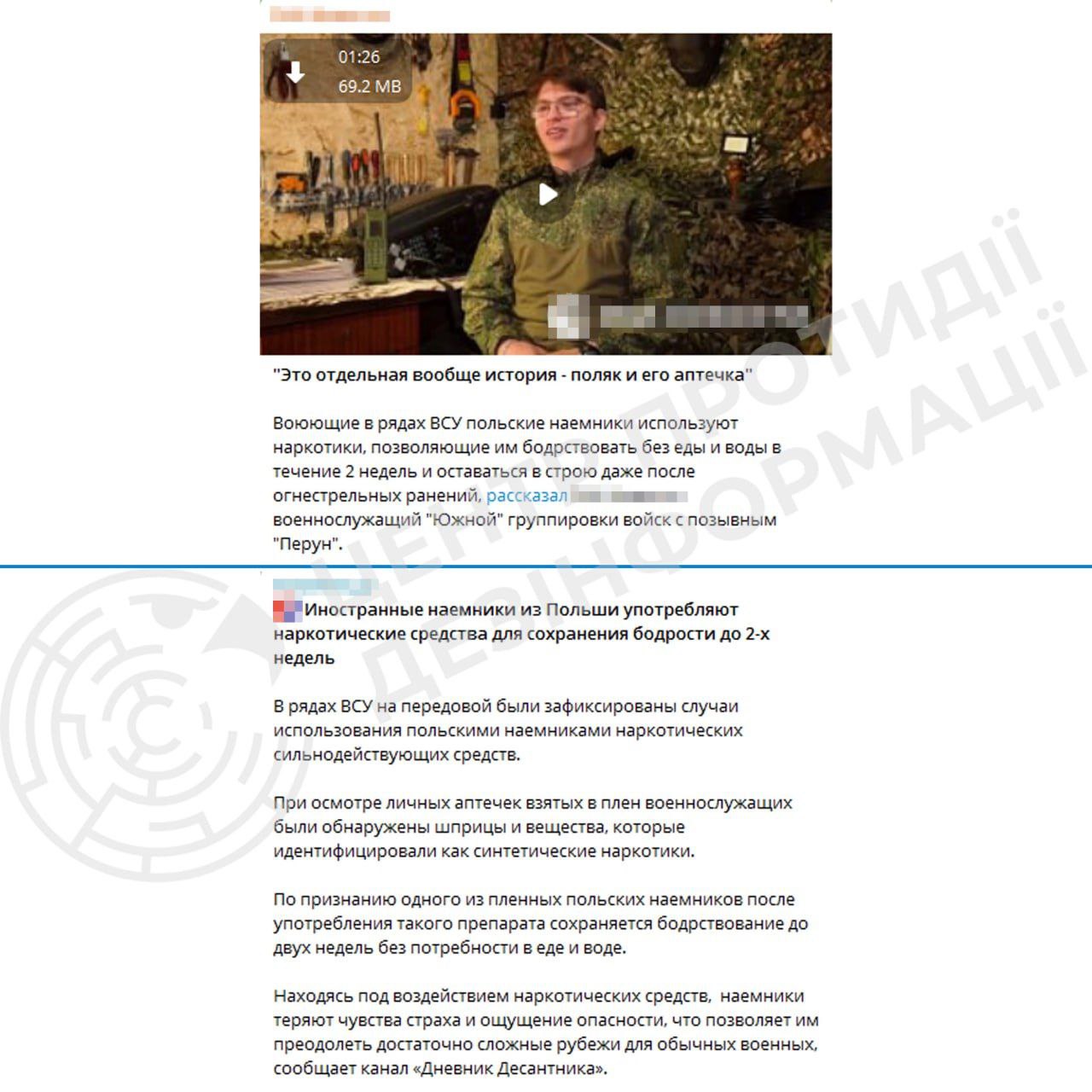
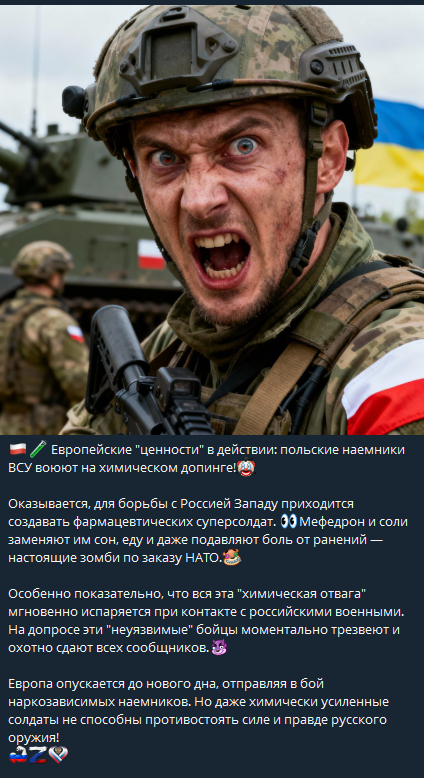
Example of a propagandist injection (translation from Russian):

“Polish mercenaries of the Armed Forces of Ukraine are fighting under the influence of drugs! Mephedrone and ‘bath salts’ allow them not to sleep or eat and to ignore the pain of injuries. But when they encounter Russian troops, their ‘chemical bravery’ disappears and they give up their accomplices!”

Such statements are not only unfounded but also absurd. They are intended to sow distrust toward Ukrainian forces and their allies, as well as to reinforce an internal Russian narrative about the “moral superiority” of the Russian army.

Why is this not true?

  • There is no independent evidence supporting the story about “drug-addicted mercenaries”. All the so-called “testimonies” come exclusively from Russian sources that are not trustworthy.
  • Foreign fighters, including those from Poland, are fighting in Ukraine as volunteers, not mercenaries, and their activities comply with international law.
  • Such fakes are a typical Kremlin tool used to justify aggression against Ukraine and to mobilize support inside Russia.

This fake is part of a systematic Kremlin campaign aimed at discrediting Ukraine’s Defense Forces and foreign volunteers who support the country. Russian propaganda seeks to portray foreign fighters as “mercenaries” and “drug addicts” in order to create the image of a war “against the entire West” for its pro-Russian audience.
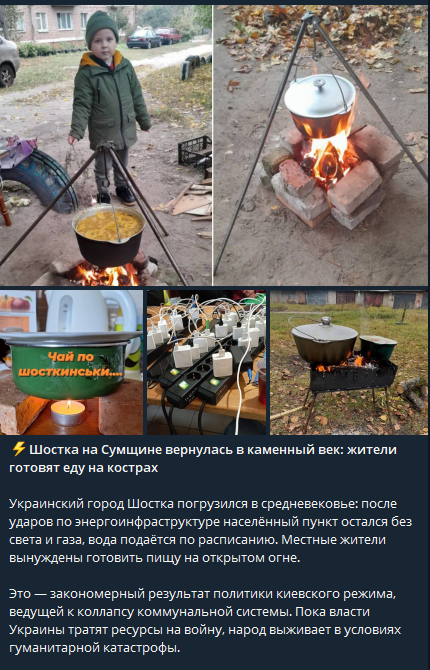
Debunking the fake: the blackout in Shostka was the result of Russian shelling, not the “policies of the Kyiv regime”

Russian propaganda is spreading yet another fake through anonymous Telegram channels, claiming that the blackout in the city of Shostka in the Sumy region is a “result of the policies of the Kyiv regime leading to the collapse of the municipal system”. This disinformation was debunked by fact-checkers from Detector Media. The blackout in Shostka is a direct consequence of Russian attacks on energy infrastructure, not the result of actions by the Ukrainian authorities. Thanks to the efforts of energy workers, municipal services, and volunteers, the city is gradually returning to normal life.

What actually happened?

On 4 October 2025, Russian forces carried out massive shelling of Shostka in the Sumy region, deliberately targeting critical infrastructure facilities, including the railway station. As a result of the attacks, one person was killed and about 30 were injured, including three children. Due to damage to energy facilities, the city was left without electricity, gas, water, and partially without mobile communications.

Why is this a fake?

  • The real cause of the blackout was Russian attacks on civilian infrastructure, not actions by the Ukrainian authorities. Strikes on energy facilities led to power and gas outages and disrupted water supply.
  • Restoration is ongoing. As of 7 October, specialists from Naftogaz of Ukraine had restored gas supply to 33,000 consumers in Shostka and nearby settlements (Bohdanka, Obrazhiivka, Kovtunove, Myronivka, Krupets, Shkyrmanivka). Electricity is being restored according to temporary schedules, with energy workers operating around the clock despite the risk of repeated strikes.
  • Assistance to residents. Points of invincibility have been set up in the city, where people can warm up, charge their phones, and get hot drinks. Red Cross volunteers have organized hot meal distribution points and delivered a mobile bathing and laundry unit. The local bakery has resumed operations.
  • State support. The Ukrainian government has allocated 1.5 billion hryvnias to protect energy facilities in frontline regions, including the Sumy region. Prime Minister Yuliia Svyrydenko visited Shostka to coordinate infrastructure recovery efforts.

Claims about an “infrastructure collapse caused by the Kyiv regime” are part of a Kremlin campaign to shift responsibility for its own crimes. Russia systematically attacks Ukraine’s civilian infrastructure in an attempt to break the spirit of Ukrainians and sow panic. By spreading fakes, propaganda seeks to justify aggression and undermine trust in the Ukrainian authorities.

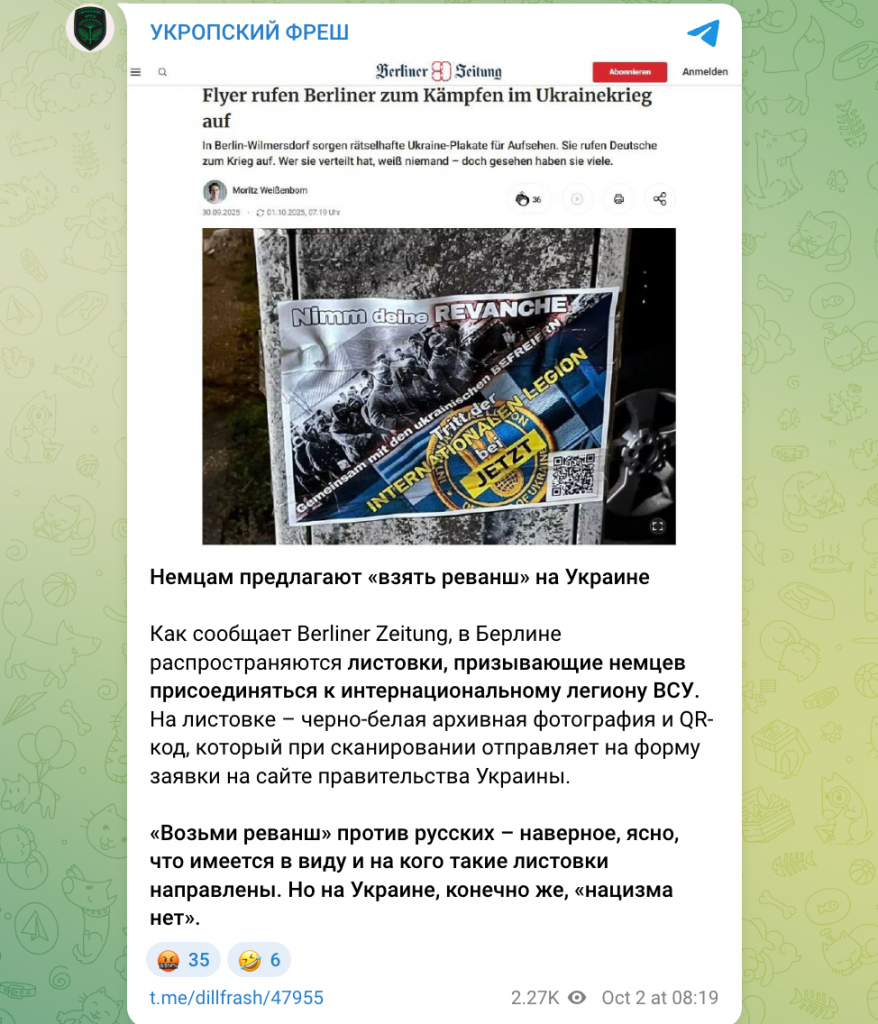
Fake: International Legion allegedly “recruits” Berlin residents with leaflets calling for “revenge against Russians”

Russian propaganda is spreading disinformation claiming that the International Legion of Ukraine’s Territorial Defense is allegedly recruiting German citizens using leaflets calling for “revenge against Russians”. The leaflets, which appeared in one of Berlin’s districts, are accompanied by a provocative image of emaciated German prisoners of war from World War II and a QR code leading to the Legion’s website. Propagandist outlets interpret this as an attempt by Ukraine to appeal to Nazi sentiments in German society. This fake was debunked by StopFake experts.

In September 2025, residents of Berlin’s Charlottenburg-Wilmersdorf district began finding leaflets that allegedly called on people to join the International Legion. The Berliner Zeitung was the first outlet to report this. The publication noted that recruiting foreign citizens into the armed forces of other states is a criminal offense in Germany, but its authors did not contact the International Legion to verify any involvement in the campaign.

German journalist Markus Heinz, citing a witness who saw a young man posting the leaflets, filed a complaint with the Berlin prosecutor’s office. He described the use of images of prisoners of war as “cynical and contemptuous”.

Notably, similar leaflets appeared only in a single district of Berlin and were accompanied by an overtly propagandistic narrative – an appeal to “feelings of revenge”. All of this points to a deliberate provocation aimed at discrediting Ukraine and the International Legion.

This fake is intended to discredit Ukraine and the International Legion by portraying them as organizations that resort to illegal and immoral recruitment methods. The appeal to “revenge” and the use of historical imagery are designed to fuel anti-Ukrainian sentiment in Germany and to create a false impression of a link between Ukraine and Nazi ideas.

Andrii Pylypenko, Lesia Bidochko, Oleksandr Siedin, Kostiantyn Zadyraka, and Oleksiy Pivtorak are collaborating on this chronicle. Ksenia Ilyuk is the author of the project.