Spilnota Detector Media
Detector Media collects and documents real-time chronicles of the Kremlin propaganda about the Russian invasion. Ukraine for decades has been suffering from Kremlin propaganda. Here we document all narratives, messages, and tactics, which Russia is using from February 17th, 2022. Reminder: the increasing of shelling and fighting by militants happened on the 17th of February 2022 on the territory of Ukraine. Russian propaganda blames Ukraine for these actions

On 16 February, on the 1453th day of the full-scale war, our editorial office recorded:

2732
Fake
816
Manipulation
775
Message
559
Disclosure
Русскій фейк, іді на***!

Russians have invented a new fake about a “Ukrainian drone” in Lithuania

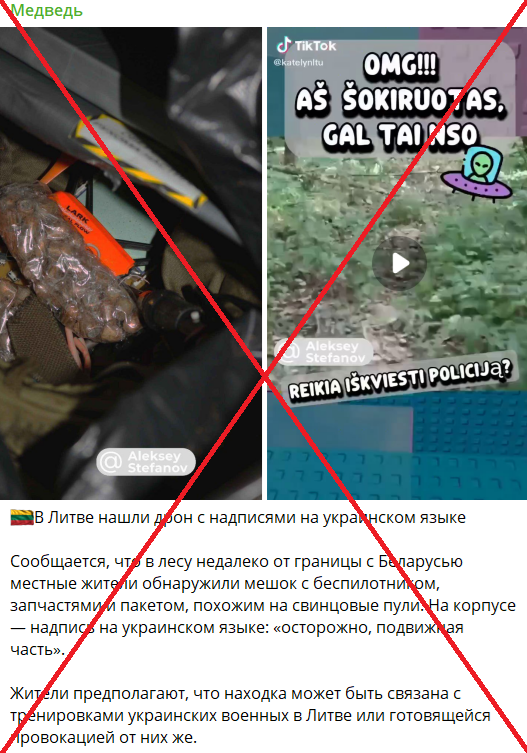
Russian media, Telegram channels, and anonymous accounts on the social network X (formerly Twitter) are widely spreading a video that allegedly shows fragments of a Ukrainian drone on Lithuanian territory. However, this video is fake and part of another Russian information attack.

This was reported by Ukrinform.

The analyzed clip uses a large amount of graphics, and the rapid change of shots makes it difficult to identify the filming location. This points to professional editing, which is not typical of amateur footage. All of this indicates that the video was created deliberately for the purpose of disinformation.
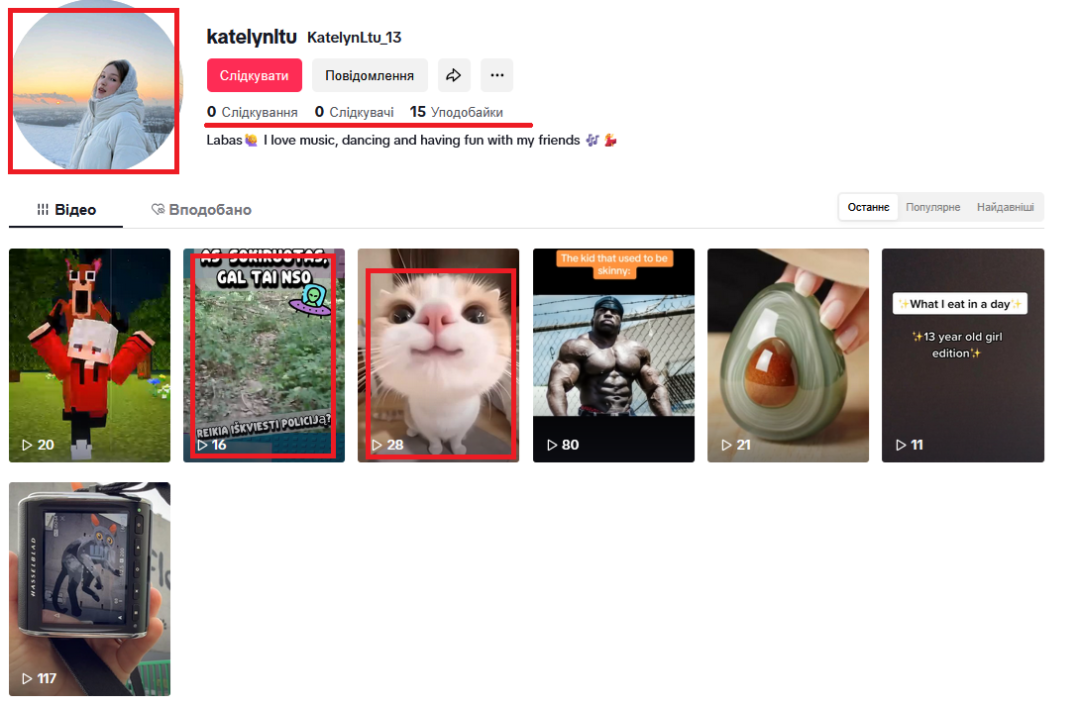
The original source of the video is a TikTok account under the username katelynltu, which was created solely to publish this fake. The channel contains only six uninformative videos with a small number of views. The profile avatar – a photo of a girl against a winter landscape – is also used by at least two other accounts, indicating that this image is being reused for bot accounts.

PHOTO 48
The video also tags Oleksii Stefanov, a correspondent for the Russian propaganda outlet Russia Today. In 2024, he was expelled from Latvia, where he had previously worked. There, Stefanov was also sentenced to one year in prison for propaganda.
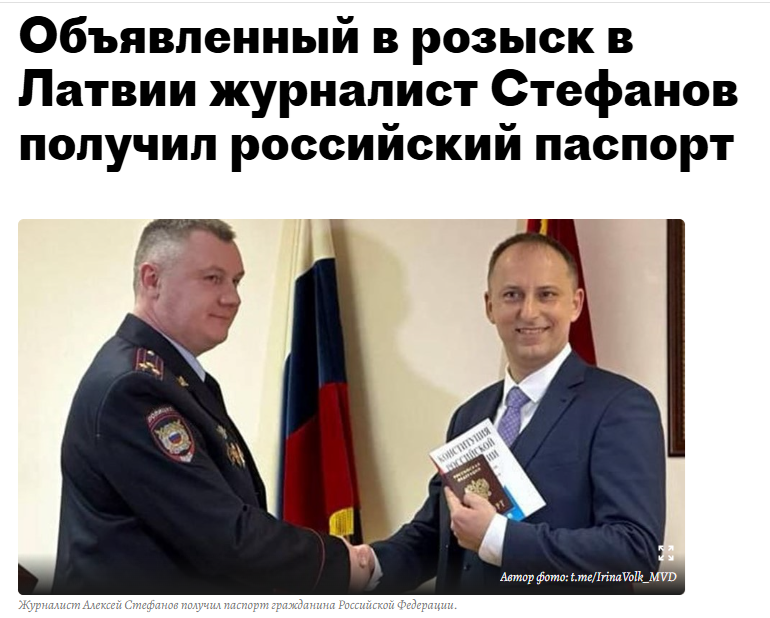
This fake emerged against the backdrop of real Russian drone attacks on the Baltic states and Eastern Europe. In particular, on 28 July 2025 a Russian drone launched from the territory of Belarus violated Lithuania’s airspace. The Lithuanian government confirmed the incident. On 1 August, another drone again entered Lithuanian airspace from Belarus. On 10 September, Russia carried out a massive drone attack on Poland, launching around 20 UAVs. On 13 September, yet another Russian drone was detected in Romanian airspace.

The information operation about a so-called “Ukrainian drone” is intended to divert the international community’s attention away from the facts of Russia’s real violations of NATO countries’ airspace.
Debunking: A photo of the damaged Cabinet of Ministers building was labeled a “fake”

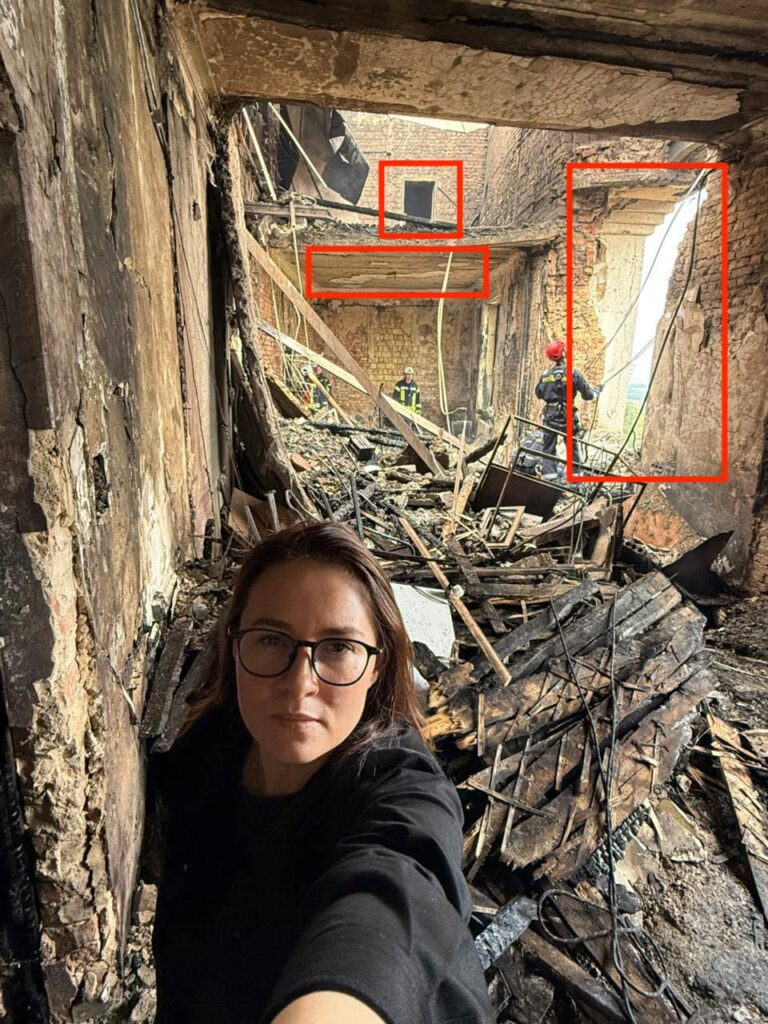
False information is spreading on social media claiming that a photo of Ukraine’s Prime Minister Yuliia Svyrydenko, allegedly taken inside the damaged Cabinet of Ministers building, was digitally manipulated. Anonymous users assert that she supposedly inserted her face into a photo taken in a different building using photo-editing software. In reality, this is a fake.

This was reported by VoxCheck.

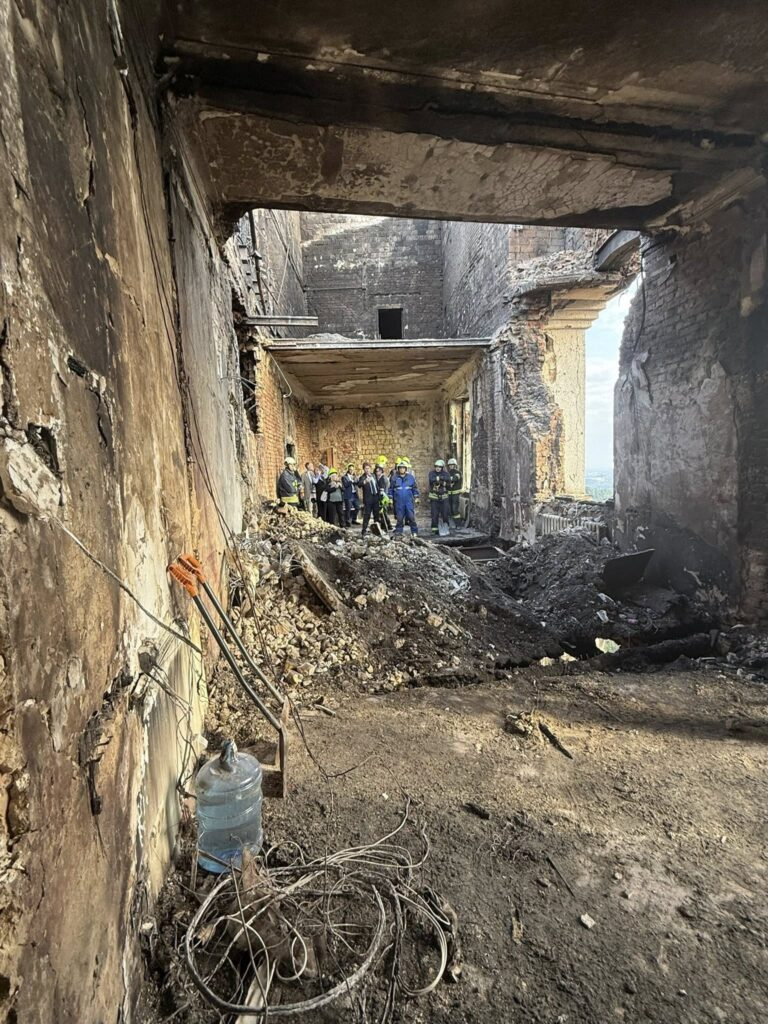
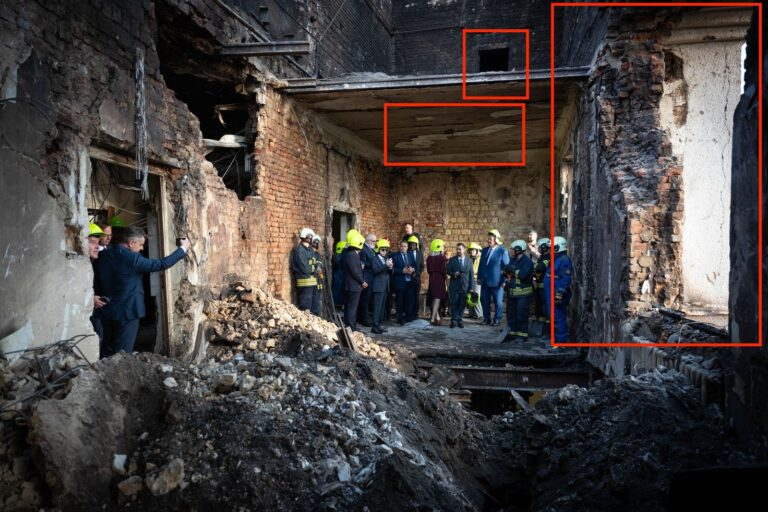
The photo is authentic, and the interior shown in the prime minister’s image matches footage taken by foreign diplomats and journalists who visited the damaged building after the missile strike.

On the night of 7 September 2025, Russian forces carried out a massive attack on Kyiv, during which an Iskander-9M727 missile hit the Cabinet of Ministers building. This was the first direct strike on a government building since the start of the full-scale war. No one was injured, but the upper floors suffered significant damage, and fuel from the missile tanks ignited, causing a fire inside the building.

  Source: Yulia Svyrydenko's Facebook page
  Source: Ministry of Foreign Affairs website

After the attack, the Ukrainian government organized tours of the damaged premises for foreign diplomats. Photos from these visits show the same office as in Yuliia Svyrydenko’s picture. Identical features include the window openings with characteristic damage, scorched brick walls, destroyed floor slabs, and a passageway in the wall.

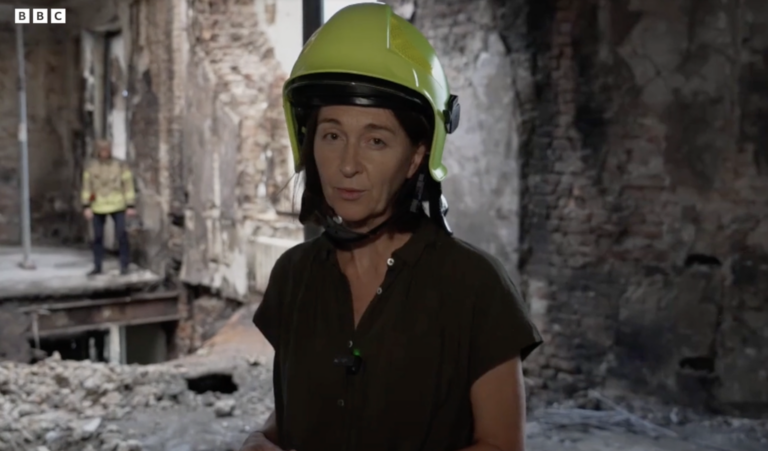
The authenticity of the photo was confirmed, among others, by the Ambassador of the European Union to Ukraine, Katarina Mathernova, who also published images from the very same room. Foreign journalists likewise documented the office from different angles in their reports.

  Source: Kateryna Maternova's Facebook page
  Source: BBC

Thus, claims that the photo is fake are unfounded – it is authentic and accurately reflects the real condition of the damaged government building after the Russian missile strike.

Andrii Pylypenko, Lesia Bidochko, Oleksandr Siedin, Kostiantyn Zadyraka, and Oleksiy Pivtorak are collaborating on this chronicle. Ksenia Ilyuk is the author of the project.